

LIVE VIRTUAL CORE CE TRAINING:
Beyond
Overfunctioning
Clinical Formulation and Intervention with High‑Functioning Client
Learn to recognize overfunctioning as an adaptive clinical strategy, and help highly capable clients create greater flexibility without pathologizing the strengths that helped them succeed.
This 3-hour clinical program helps counselors assess and treat high-functioning, over-responsible, and achievement-oriented clients who may struggle with anxiety, exhaustion, perfectionism, relational strain, and difficulty letting go of responsibility. Participants learn to distinguish healthy strengths from protective patterns that have become rigid or distress-maintaining, explore the beliefs and experiences underlying those patterns, and develop clinically appropriate formulations. The program integrates evidence-informed cognitive, behavioral, mindfulness, emotion-regulation, and psychological-flexibility approaches to help counselors translate assessment into individualized interventions.
3 CORE Continuing Education Hours
Licensed Professional Counselors Association of Georgia (LPCA-GA)
Approval # M-0826-972
You know this client.
They may be successful professionally and highly functional in daily life. And yet, underneath that competence, they may be exhausted, anxious, resentful, disconnected from their own needs, or unable to stop carrying responsibility for everyone around them.
Traditional advice to “set boundaries,” “do less,” or practice more self‑care may not be enough.
To create lasting change, clinicians need to understand what the overfunctioning is doing for the client — and what makes letting go feel so difficult.
What you'll learn
Recognize the Pattern
Identify clinical presentations of overfunctioning and differentiate adaptive competence from patterns contributing to distress.
Understand What Maintains It
Explore the beliefs, relational patterns, emotional processes, and protective functions that can keep overfunctioning in place.
Formulate Clinically
Develop a more nuanced case formulation that moves beyond symptoms and identifies what the client's behavior may be protecting or preventing.
Intervene Without Pathologizing Strength
Use practical clinical interventions that help clients build flexibility, tolerate discomfort, clarify responsibility, and reconnect with their own needs.
The goal isn't to make capable people less capable.
It's to help clients develop the flexibility to choose — when to step in, when to step back, what belongs to them, and what doesn't.
Who this training is for
High-achieving or high-functioning adults — clinicians working with this population
Caregivers and chronic over-responsibility
Perfectionism presenting in session
Anxiety and burnout in capable clients
Difficulty with boundaries across roles
Relational overfunctioning in couples or families
Clients whose competence can obscure significant distress
Beyond Overfunctioning
Clinical Formulation and Intervention with High‑Functioning Clients
This 3-hour clinical program helps counselors assess and treat high-functioning, over-responsible, and achievement-oriented clients who may struggle with anxiety, exhaustion, perfectionism, relational strain, and difficulty letting go of responsibility. Participants learn to distinguish healthy strengths from protective patterns that have become rigid or distress-maintaining, explore the beliefs and experiences underlying those patterns, and develop clinically appropriate formulations. The program integrates evidence-informed cognitive, behavioral, mindfulness, emotion-regulation, and psychological-flexibility approaches to help counselors translate assessment into individualized interventions.
3 CORE Continuing Education Hours
Licensed Professional Counselors Association of Georgia (LPCA-GA)
Approval # M-0826-972
MEET YOUR INSTRUCTOR
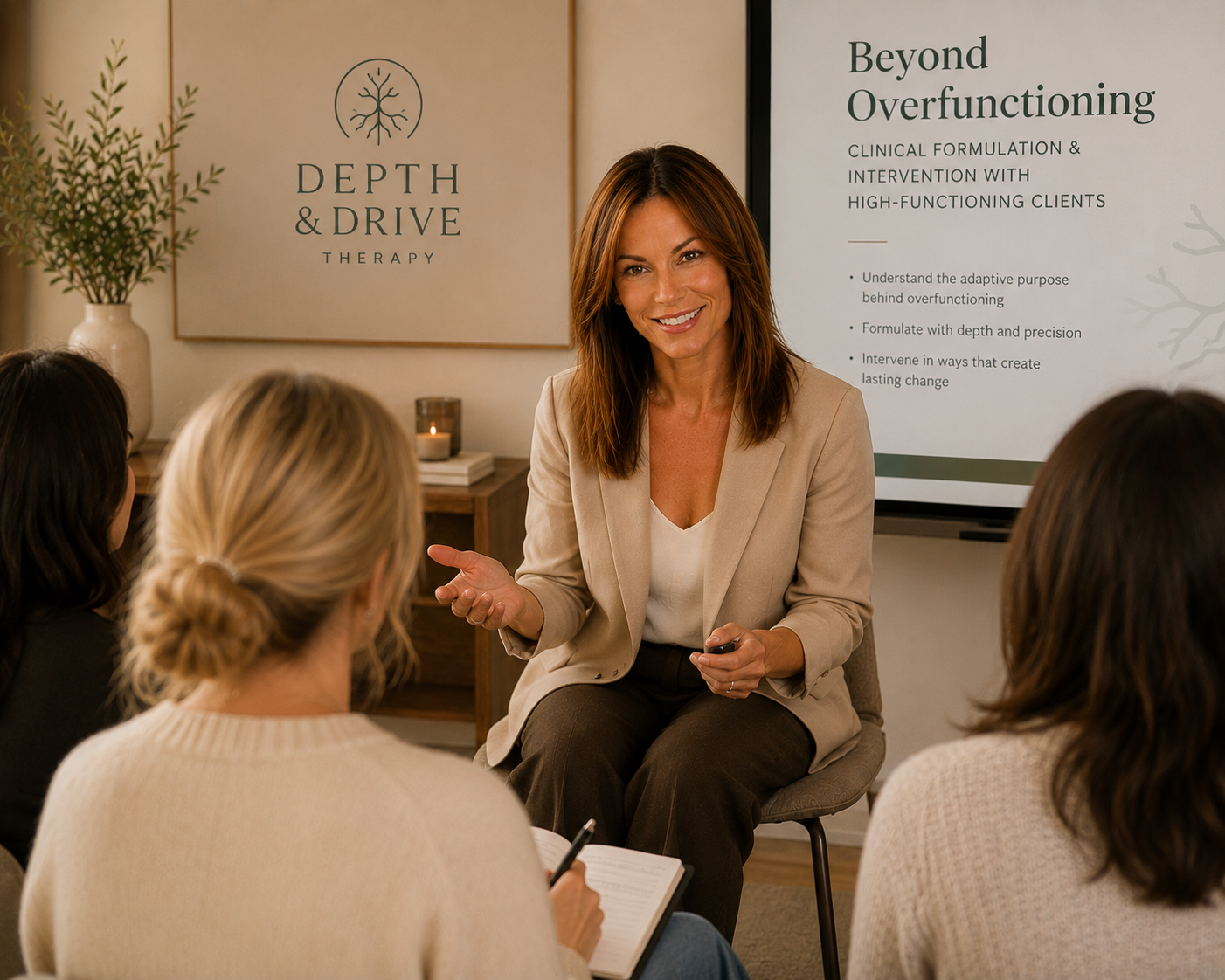
Nichole Michelson, MA, LPC, PCC
Nichole Michelson is a Licensed Professional Counselor and Professional Certified Coach whose work focuses on high-functioning, achievement-oriented adults navigating anxiety, over-responsibility, relationships, transitions, and the pressure of carrying significant responsibility.
Her background bridges clinical mental health and more than a decade in the corporate world, giving her a unique perspective on the ways competence, achievement, responsibility, and protective coping strategies can intersect.